
Invention, experimentation, and re-storying: why narrative therapy can offer a landing place for 2SLGBTQIA+ community.
2SLGBTQIA+ communities have been collaboratively inventing practices of survival and joy throughout our history that have helped us through some dark times. As we close the books on another pride month while facing a period of political regression and contraction, I’ve been thinking about the skills, values, beliefs, and connections we have relied on to persist. Our communities have always been responding, and so have the individuals within our communities. Those skills, values, beliefs, connections, and responses are at the heart of what narrative therapists are interested in.
As a therapist who loves serving 2SLGBTQIA+ communities, I am so grateful for narrative therapy practices. They are deeply dignifying, and many people experience them as both helpful and respectful.
Unfortunately, given the mental health field’s history of getting it really wrong with 2SLGBTQIA+ folks, too many members of our community have had harmful experiences with mental health providers.
For that reason, I want to share a bit about the ideas that I find most useful as a queer narrative therapist. My hope is that it might make giving therapy a(nother) try feel more available if you’re at a place in your life where you could use some support.

So what is narrative therapy like?
Narrative therapists assume that you are the person who knows the most about your life.
This is such a useful position from which to start, especially when working with 2SLGBTQIA+ community. Too often, our expertise in our own lives is questioned by loud, well-funded systems of power (colonialism, eugenics, racism, homophobia, transphobia, etc.) that seek to pathologize and criminalize queer existence.
Narrative therapists don’t try to get you to arrive at predetermined conclusions or behave in ways that are “correct” or “normal” based on some external standard. Instead, we strive to adopt a de-centered co-researcher stance alongside you, to understand where you want to go, what obstacles are in your way, and to try to be useful companions to you on the journey.
We try to ask ethically curious questions. I don’t mean curious in the treat you like a lab specimen sense. It’s that we haven’t already decided what the “right” answer when we ask questions. We ask questions so you can speak in rich detail about the histories of your skills, values, beliefs, relationships, and hopes in order to generate new meanings, and new action plans to respond to the challenges you are facing.
For example, consider the idea that you, the reader, are reading this because you have already survived every challenge you’ve ever faced. You did that somehow.
Hopefully sometimes that’s because you had the support you needed from others, because you had role models that showed you it was possible, or because you got the resources you deserved. Other times, it might have been by clinging to life or hope with just your fingernails.
A narrative therapist might ask how the heck you pulled that off and invite you to share the story of how you managed to do it. We ask that because so many resources worth naming live in that story. We might ask questions like:
-What did it take to get through that time in your life? Were there any particular practices or actions involved?
-Was it easy, hard, or some complicated mix?
-What might this suggest about the kind of person you are? What might it tell you about your values?

Narrative therapists take an anti-individualizing stance.
We don’t look at success as the outcome of heroic solo pursuits. We’re interested in people as relational beings living in contexts. This means narrative therapists will often ask questions about relationships that matter. They could be relationships with a chosen family member, a precious animal companion, a fictional character, or a personal hero that makes a difference in your life.
We might ask questions like:
-Were there any relationships that made a difference to how you got through? For example, were there any queer role models or trancestors that helped you to feel more possible?
-To whom would it mean the most to see you getting through this challenge?
-Who would be unsurprised to know you got through this, and what is it they know about your skills, values, or history that would have them so unsurprised?
-Is there anyone you would want to share this story with? What difference would you hope it might make for them to know that it’s possible to get through a challenge like that?

Narrative Therapists are interested in how power shapes people’s lives
We are deeply interested in the way that power structures use dominant stories punish those who defy the norm. Narrative therapists are not neutral in the face of injustice. As my brilliant colleague, Kim, so powerfully put it in her recent blog post on what dandelions can teach us about queerness;
“I learned the word weed before I learned the word queer, but they taught me the same thing: you are growing in the wrong place. Both words, I only much later understood, are political. Not botanical. Not biological. Not natural. Just white supremacist capitalist cisheteropatriarchal power, deciding (yet again) what belongs and what doesn’t, and trying to cloak that decision in the authority of nature to make it feel inevitable.”
Narrative therapists often invite you to get curious about the “good” and “normal” options for living you have been presented with in order to uncover the systems of power defining those parameters.
For example, if you were noticing an interest in exploring ethical non-monogamy, but shame or guilt were telling you not to, a narrative therapist might offer space to explore your own ideas about ethical non-monogamy versus the ideas you have been offered.
We might ask questions like:
-What ideas have you been presented with about what “good” or “healthy” relationships are supposed to be like? Have you had a chance to learn about ethical non-monogamy from people who practice it?
-Is there anything you find useful/helpful about those ideas? Is there anything you find unhelpful about those ideas?
-Who might benefit from the idea that ethical non-monogamy is less valuable than monogamy?

Narrative Therapy conversations can feel good
While therapeutic work can be challenging, many folks I have narrative conversations with have expressed surprise at how therapy is helpful and useful without being painful in the ways they thought therapy would be. I suspect that’s because being asked about what matters to them, their important relationships, and their practices of living, loving, and responding to injustice invites them to see themselves as capable responding agents.
If you’ve been thinking about trying therapy or even a different style than you’ve experienced before, I hope this gives some ideas about what narrative practices could offer. There are lots of cool queer narrative practitioners (including me!) who would be excited to meet you.
If therapy doesn’t feel like the thing right now, what relationships, communities, and practices might you lean on? What skills and resources in your history of surviving and thriving could you tap into?
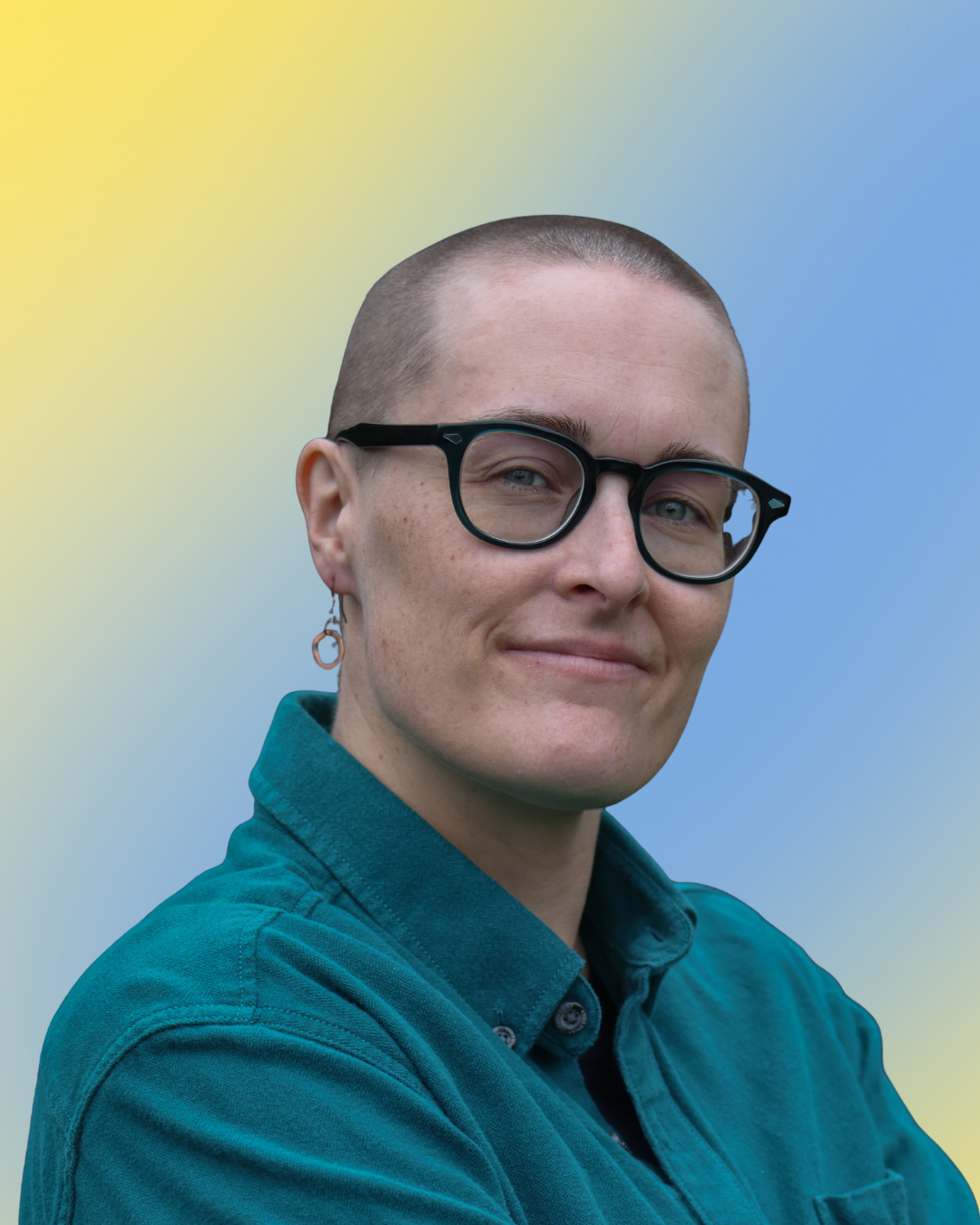
Meet Julie Stewart
Julie tends to be informal and collaborative, and people they meet for counselling describe their style as warm, caring, and genuinely interested in the people they’re speaking with. Julie tries to offer questions to help folks think and talk through their situations in ways they haven’t gotten to yet. They support partners and families in having needed conversations in dignifying, respectful, and generative ways. Conversations with Julie may include calm, quiet witnessing of big feelings and important stories. They may also include shared joking and belly laughs as appropriate.
Find their full bio here. And if you are seeking supervision for your own work in therapy, find their supervision bio here, and consider their consultation group starting this September (2026)!