
The Ache Beneath the Ice
Queer Longing, Masculinity, and Meaning in Heated Rivalry
by Aziz Mirza
When a show about hockey becomes a meditation on queer masculinity—its power, its limits, its longing—complexity surfaces.

Heated Rivalry has been widely celebrated for its chemistry, pacing, and electric tension between its two leads, and deservedly so. But what makes the show linger long after is not just the romance itself. It’s the emotional terrain beneath it: the ways masculinity, power, longing, attachment, and fear quietly shape queer intimacy within systems that do not hold it safely.
Shane Hollander’s masculinity is corporate-friendly: disciplined, media-trained, sponsorship-safe. Ilya Rozanov’s is the other celebrated archetype: swagger, dominance, the thrill (illusion) of being untouchable. The series honours how these scripts work; the protagonists appear to benefit greatly from patriarchy. They are publicly admired, financially secure, and rewarded for aggression, competitiveness, and stoicism. Their bodies are celebrated; their confidence is affirmed. Patriarchy has worked for them in tangible ways, granting status, safety, and legitimacy in the world. However, the show also refuses to pretend this transaction is harmless. The men’s bodies tell this truth first: tension, withdrawal, the constant fear of visibility. This same system fails them profoundly.

Patriarchy offers recognition without intimacy.
It rewards performance while highlighting emotional vulnerability as liability. It teaches these men how to dominate space, but not how to share intimate truth within it. We see this in how desire must be managed, hidden, or displaced, often transformed into rivalry, banter, or conflict. Love becomes something to control rather than something to surrender to.
This is where queer masculinity begins to quietly disrupt the frame. Heated Rivalry offers glimpses of masculinity that is not solely about dominance or emotional restraint, but about yearning, ambivalence, and relational risk. Strength is expressed not only through physical power, but through endurance, patience, and restraint. Vulnerability appears in the pauses, the almost-confessions, the moments where what is felt far exceeds what can be spoken.
Queer longing is one of the show’s most resonant emotional undercurrents. This longing is not simply about wanting another person, it is about wanting a life that feels possible. It stretches across years of stolen moments, glances, near-misses, prolonged separation, coded conversations, and “almost” honesty. This kind of longing is familiar to many queer people, shaped by fear, timing, safety concerns, and the ongoing negotiation between desire and survival.
From an attachment lens, we see familiar patterns emerge.
There are avoidant strategies: pulling back when closeness threatens exposure. There are anxious reachings: moments of risk that are met with silence or distance. Ruptures occur without language, and repairs are often partial or delayed. These relational dynamics mirror the lived experiences of many queer relationships formed under conditions of secrecy, internalized shame, and social constraint.
Symbolism deepens this emotional landscape. Rivalry itself becomes a metaphor; desire displaced into competition, intimacy transformed into conflict. The arena or rink is both liberating and containing: a space where bodies move freely while emotions remain tightly regulated.
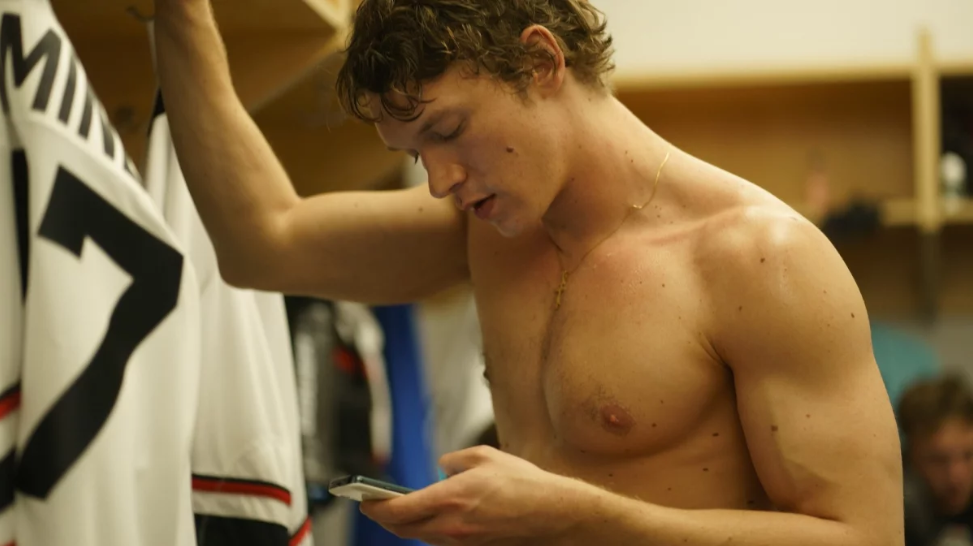
Rules are explicit, feelings are not.
The show also invites reflection on the difference between coming out and coming in. Coming out is often framed as a singular, public act: visible, risky, identity-altering. Coming in, however, is quieter and arguably more radical. It is the ongoing choice to move toward emotional truth, mutual recognition, relational safety, and an attachment lifeline, cultivating a space where vigilance can soften. This coming in is brilliantly highlighted through "the cottage": a temporary queer domestic world where love can be named, grief can be spoken, and the future can be imagined without performance.

And while Heated Rivalry succeeds in offering a rare and emotionally rich portrayal of queer masculinity, it also leaves room to more fully engage the broader complexities of queer experience. Much of the narrative centers on individual resilience and private negotiation, with less attention to the systemic forces that shape those struggles, such as the cumulative impact of systems and structures where queerness is not truly held. By more explicitly situating the characters’ relational and emotional dilemmas within these structural realities, the show could deepen its exploration of how power, risk, and belonging are not only personal concerns, but systemic ones.
What it does accomplish, Heated Rivalry gives us something rare in queer sports stories: joy that is not naive, and masculinity that is not reduced to either toxicity or sainthood. It shows men learning to touch, tell the truth, and choose each other anyway. In witnessing their tenderness, ambivalence, and resilience, we are invited to recognize our own. And in that recognition, there is something quietly healing; an affirmation that longing, vulnerability, and love are not weaknesses, but deep forms of queer strength.