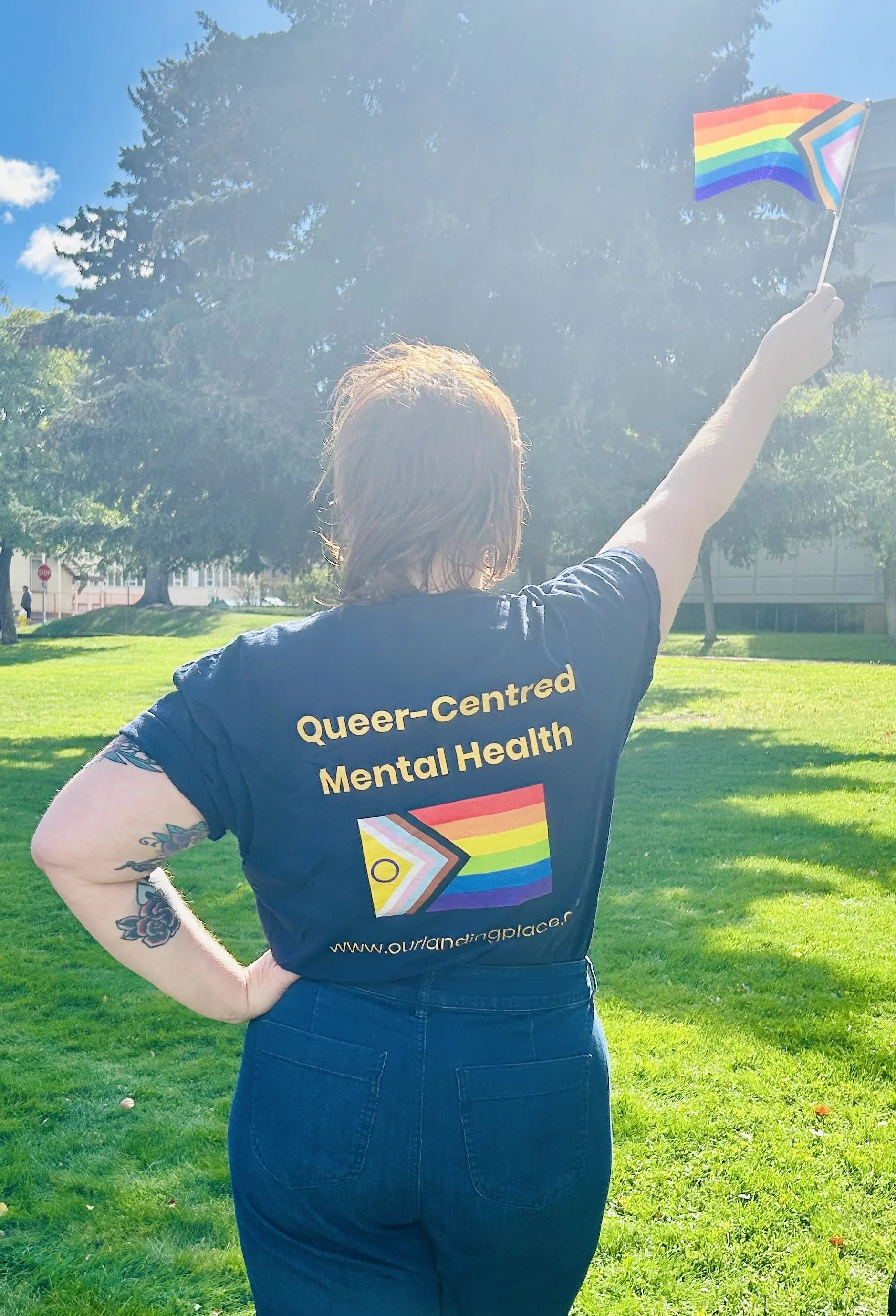
by Nicole Stanchfield, our amazing Client Care Coordinator!
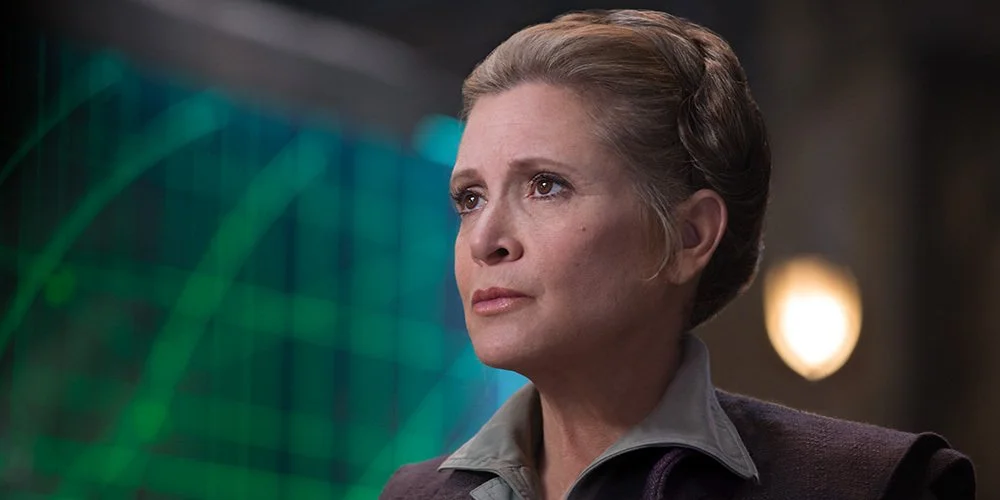
When I think about liberation, I can't help but think about Princess Leia.
Maybe that's not where most people begin, but it's where my mind goes. Leia standing at the helm of the Rebel Alliance, refusing to surrender to an Empire that insisted the way things were was the way things had to be. She fought for a future she might never fully get to enjoy herself. A future that required courage, collective action, and a stubborn belief that another world was possible.
And maybe that's why she feels so familiar during Pride.
Liberation, at its core, is the ability to determine our own lives. It is freedom from systems, expectations, and constraints that dictate who we are allowed to be. It is the right to exist authentically without punishment, exclusion, or fear.
But what does liberation actually look like in the world we live in now?
I think about the first Pride marches. I think about Stonewall. I think about the queer and trans people who stood up to a system that demanded their silence and compliance. Much like the Rebels, they challenged an entrenched power structure that seemed impossible to defeat. They marched, protested, organized, and risked everything so that future generations might have more room to breathe.
People often say that they walked so we could run.
Yet here we are, decades later, still running. Still marching. Still fighting.
And that makes me wonder: why is liberation not permanent?
Why is it that once something has been liberated, it can somehow be threatened again? Why is freedom not a static condition? Why does it seem to require constant maintenance to prevent a return to captivity?
There should be a word for the opposite of liberation. Not just oppression, but the process of slowly undoing freedom. The process of convincing people that rights are negotiable, that dignity is conditional, that hard-won victories can be revisited and revoked.
The reality is that liberation is not a destination. It is a practice.
It is the ongoing work of confronting systemic inequities, questioning power, and refusing to accept exclusion as inevitable. It requires people willing to challenge systems that benefit from the status quo. It requires communities willing to imagine something better.
And if I'm honest, sometimes that feels exhausting.
There are days when I resent that the responsibility for liberation so often falls to the people who need liberating in the first place.
As queer people, we already carry our backpacks full of barriers. Some are visible. Many are not. We carry histories of discrimination, fears about safety, concerns about belonging, and the emotional labour of explaining ourselves to a world that often treats our existence as a debate rather than a fact.
And then we are asked to carry the movement too.
It feels unfair.
I think about the saying, "many hands make light work."
The work of liberation should not belong solely to those carrying the heaviest loads. If people whose backpacks are lighter joined in more often—not as saviours, but as partners—perhaps the journey would not feel so steep. Perhaps liberation would feel less fragile.
Because maintaining freedom is not just the responsibility of those who benefit most directly from it. It is the responsibility of everyone who believes in justice.
The Rebel Alliance did not succeed because Leia fought alone.
It succeeded because ordinary people decided the Empire was unacceptable.
And maybe that's the lesson.

The Empire isn't simply a villain from a galaxy far, far away. In our world, it shows up as systems that insist cis/hetero experiences are the default, the norm, the ideal. It shows up in policies that exclude, in institutions that resist change, and in cultural narratives that position some lives as more legitimate than others.
Like all empires, those systems survive when people believe they are inevitable.
Liberation begins when people decide they are not.
Pride reminds us that freedom has never been handed down from above. It has always been won collectively. It has always required people willing to imagine a future that does not yet exist and then build it together.
I think that's why I keep coming back to Leia.
Not because she was fearless. Not because the fight was easy.
But because she understood that hope is an action.
She understood that liberation is worth pursuing even when the outcome is uncertain. She understood that leadership is not about never growing tired; it's about continuing despite the exhaustion.
As queer people, we inherit that legacy. Not just from fictional rebels, but from the very real ones who stood at Stonewall, who marched in the first Pride parades, who demanded visibility when invisibility would have been safer.